Catalog data from Open Library
3 · 371 pages · First published 1952
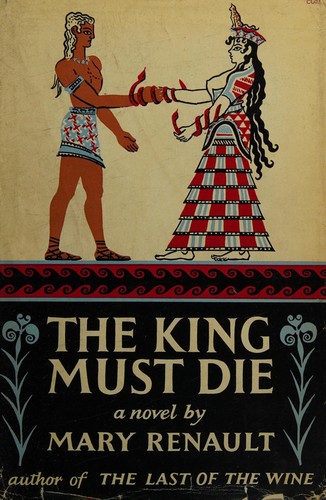
Recent discoveries in Greece and Crete make it seem possible that the legendary hero Theseus was neither fairy-tale nor myth, but a real King of Athens, a dynamic leader comparable with Alexander in his impact on the lost history of his times. His fabled enemy, the monstrous Minotaur, has been found depicted on Minoan seals; and it is likely that the youths and maidens traditionally shipped from Athens to Crete were " slaves of the god ", destined for the perilous Bull Dance which was the favourite spectacle of this brilliant, frivolous civilization.
In this reconstruction of Theseus' youth, he is seen as a boy-king in Eleusis, doomed by the ancient matriarchal earth-cult to die after a year's marriage with the sacred Queen; then in Attica as the heir to a troubled kingdom; and later sailing to Crete as self-chosen victim of the Royal Sacrifice which was the duty of Achaean kings in the dire extremity of their people. The climax of the tale is the cataclysm which, in windy spring weather during the second millennium B.C., overtook the Minoan empire and flung down the mighty Labyrinth which was the palace of the House of Minos.
- Average rating
- 3★
- 2 ratings
- Want to read
- 72
- readers
- Currently reading
- 4
- readers
- Editions
- 92
- in print & digital
Get this book
Store links search by ISBN 9780141005393. Prices are set by each store.
Subjects
- Publishers
- New English Library, Longmans, Recorded Books, Penguin Books Ltd, Signet, Longmans, Green, and Co
- Languages
- spa, ger, heb, eng